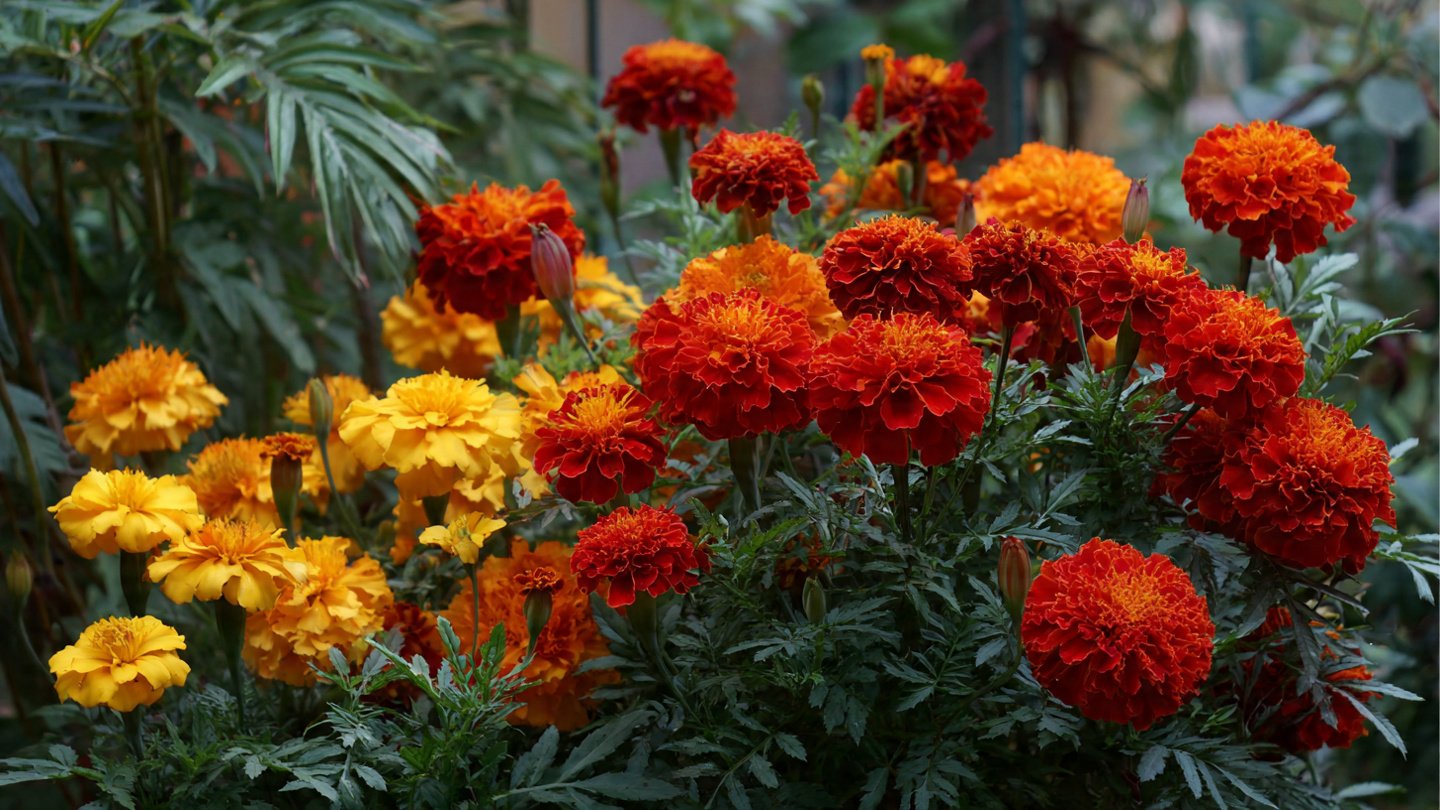
African marigolds (Tagetes erecta), renowned for their stunning golden to orange hues, are a favorite among gardeners for both aesthetic appeal and practicality. These vibrant flowers are not only a feast for the eyes but also serve as a natural pest deterrent, making them ideal for gardens of all types. This guide will walk you through everything you need to know about growing African marigolds in your home garden, from soil preparation to pest control, ensuring a flourishing display of color and joy.
1. Understanding African Marigolds
African marigolds are native to Central and South America but have become popular worldwide due to their adaptability and hardiness. These plants are characterized by:
- Height: Typically growing between 12 to 36 inches tall.
- Blooms: Large, pom-pom shaped flowers with vibrant yellow, orange, or gold petals.
- Foliage: Fragrant, deeply lobed leaves that offer a pleasant aroma when crushed.
Due to their impressive height and vibrant blooms, African marigolds can act as focal points in garden beds, borders, and containers.
2. Choosing the Right Position in Your Garden
Sunlight Requirements
African marigolds thrive best in full sunlight. Aim for a location that receives at least 6 to 8 hours of direct sunlight each day. Insufficient light can lead to weaker plants with fewer blooms.
Soil Conditions
These flowers prefer well-drained soil enriched with organic matter. A pH level between 6.0 and 7.0 is ideal. To prepare the soil:
Latest Posts
- Easy Steps to Successfully Grow Bhindi in Grow Bags at Home
- Easy Steps to Grow a Healthy Guava Bonsai at Home for Beginners
- How to Successfully Grow and Cultivate White Strawberry Plants at Home for Delicious and Unique Fruits
- Ultimate Guide to Successfully Growing Weeping Fig Outdoors with Proven Techniques and Expert Tips
- How to Successfully Grow Flemish Beauty Pear Trees in Canada for Optimal Harvest
- Easy Hack to Grow Strawberries Year Round in Your Home Garden for Delicious Harvests
- Growing Flemish Beauty Pears in Canada A Complete Guide for Local Gardens
- The Ultimate Guide to Growing Hibiscus Plants Year Round for Vibrant Blooms and Healthy Foliage
- Easy Ways to Boost the Growth Rate of Your Indoor Peace Lily for Lush Green Foliage
- How to Successfully Grow Oak Leaf Lettuce in Your Home Garden for Fresh and Flavorful Salads

- Test the Soil: Use a soil test kit to determine pH and nutrient levels.
- Amend the Soil: Add compost or well-rotted manure to improve fertility and drainage.
3. Planting African Marigolds
When to Plant
In most regions, the best time to plant African marigolds is after the last frost date, typically in late spring. If starting from seeds indoors, begin 6 to 8 weeks before the last expected frost.
Propagation Methods
- Seeds: Sow seeds directly into the garden or in pots. Plant them about ¼ inch deep and space them 10 to 12 inches apart for optimal growth.
- Transplants: If using nursery plants, transplant them into the garden after the risk of frost has passed.
4. Caring for African Marigolds
Watering
Consistent water is vital for healthy marigold plants:
- Frequency: Water deeply once a week, allowing the soil to dry out slightly between waterings. During hot, dry spells, they may require more frequent watering.
- Method: Water at the base of the plant to avoid wetting the foliage, which can cause fungal issues.
Fertilization
While African marigolds are relatively low-maintenance, a bi-monthly application of balanced fertilizer can enhance growth and flowering:
- Type: Use a 10-10-10 or similar balanced fertilizer.
- Application Method: Follow the manufacturer’s instructions for dosage, applying around the base of the plants.
Pruning and Deadheading
Regular deadheading (removing spent flowers) encourages more blooms and maintains the plant’s appearance. Use clean, sharp scissors to snip off faded flowers at their base.
Pest and Disease Management
African marigolds boast natural pest-repellent properties, but they can still be susceptible to certain issues:

- Pests: Watch out for aphids, spider mites, and whiteflies. Introduce beneficial insects like ladybugs or apply insecticidal soap to manage infestations.
- Diseases: Avoid fungal diseases by ensuring proper spacing for air circulation and watering in the morning.
5. Harvesting and Using African Marigolds
African marigolds not only enrich your garden visually but also offer a variety of uses:
Floral Arrangements
Cut flowers can last about a week in a vase. Harvest in the morning for the best results, and place them in fresh water promptly.
Companion Planting
These flowers are excellent companions for tomatoes, peppers, and cucumbers, as they repel nematodes and other pests.
Culinary Uses
Petals of African marigolds are edible and can be used as a colorful garnish in salads or as a flavoring agent, providing a slightly citrusy taste.
6. Creating a Vibrant Display
Seasonal Rotation
To maintain a vibrant landscape, consider rotating African marigolds with other flowering plants to enhance visual interest and soil health.

Color Combinations
Pair marigolds with contrasting flowers like purple petunias or white snapdragons for a stunning garden display.
7. Troubleshooting Common Issues
While African marigolds are hardy, you may encounter issues from time to time. Here are some common problems and their solutions:
Yellowing Leaves
This could indicate overwatering or nutrient deficiency. Ensure proper drainage and consider fertilizing with a balanced formula.
Stunted Growth
If your marigolds aren’t thriving, check for root-bound conditions in containers, or ensure they receive enough sunlight.
Pest Infestations
Regularly inspect your plants for pests. If you see signs of trouble, act quickly with insecticidal soap or neem oil.

8. Frequently Asked Questions (FAQs)
Q1: Are African marigolds annuals or perennials?
A1: African marigolds are typically grown as annuals, although in warmer climates, they can behave as perennials.
Q2: Can I grow African marigolds in containers?
A2: Absolutely! African marigolds thrive in containers. Ensure your pots have good drainage and use a quality potting mix.
Q3: Do African marigolds attract bees and butterflies?
A3: Yes, marigolds attract beneficial pollinators like bees and butterflies, making them a great addition to any pollinator garden.
Q4: How can I store marigold seeds for future planting?
A4: Allow the seed heads to dry completely on the plant, then harvest them. Store seeds in a cool, dry location in a paper envelope or breathable container.
Q5: How long do African marigolds bloom?
A5: African marigolds bloom from late spring until the first frost, providing a long-season display of color in your garden.

Conclusion
Growing African marigolds in your home garden can provide vibrant colors and a host of benefits. With minimal care and attention, these dazzling flowers can flourish, serving as stunning visual elements and valuable companions to other plants. From their pest-repelling properties to their impressive blooms, African marigolds are an essential addition to any garden. Follow the tips outlined in this guide, and enjoy the beauty and joy they bring to your home!