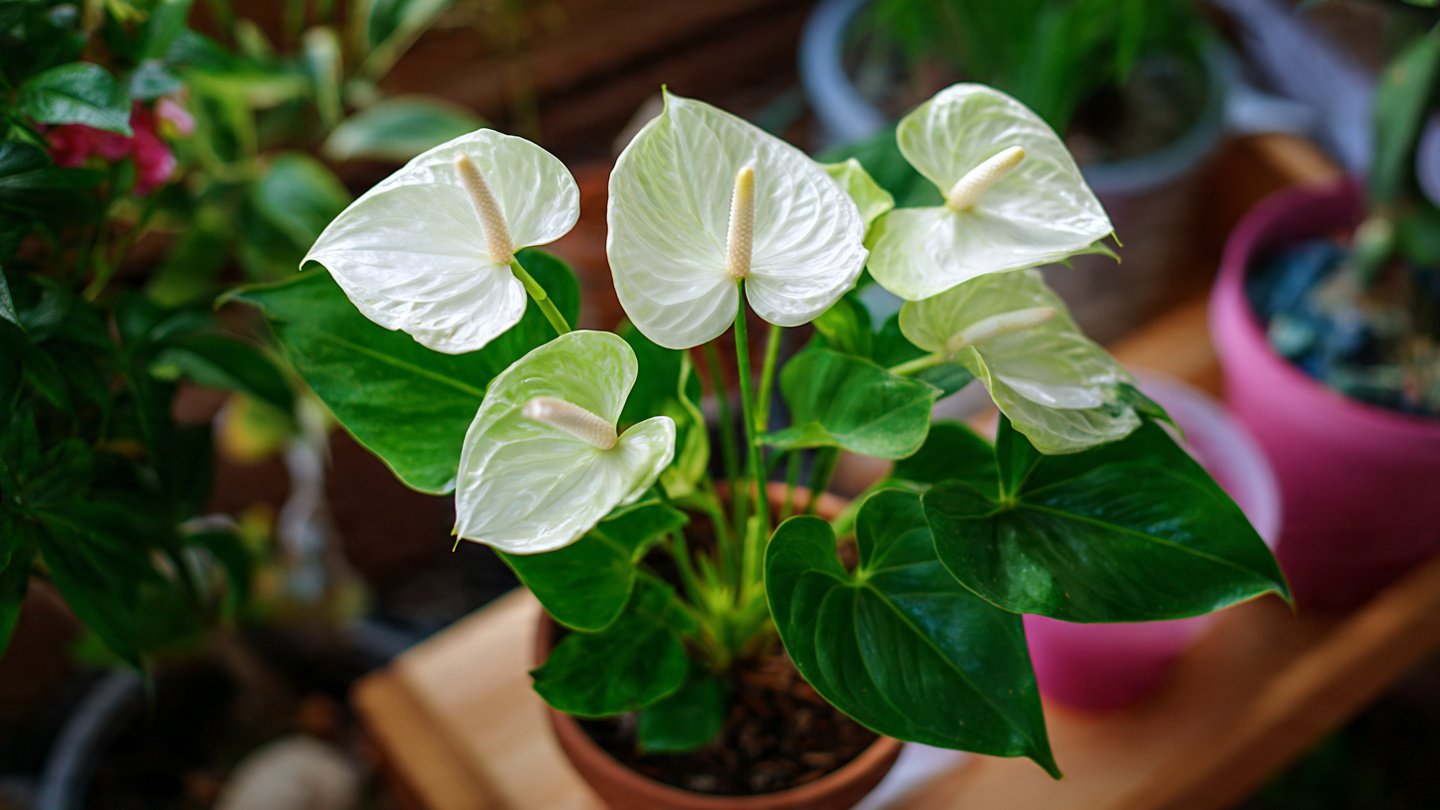
White anthuriums, with their striking heart-shaped flowers and lush green leaves, are one of the most sought-after indoor plants. Known for their unique beauty and durability, these plants are perfect for both beginners and seasoned plant enthusiasts. This comprehensive guide will help you understand how to successfully grow white anthurium indoors, from selecting the right potting mix to caring for the plant and troubleshooting common issues.
Overview of White Anthurium
Anthurium andraeanum, commonly known as the flamingo flower or boy flower, is native to the rainforests of Central and South America. The white variant stands out due to its elegant appearance, featuring glossy white spathes and yellow spadices. These plants thrive in warm, humid environments and can bloom for several months when given the right conditions.
Benefits of Growing White Anthurium Indoors
- Aesthetic Appeal: The glossy white flowers add a sophisticated touch to any space.
- Air Purification: Anthuriums can help filter indoor air pollutants, improving overall air quality.
- Easy Care: With the right care, they are relatively low-maintenance.
- Long Lifespan: When properly cared for, white anthuriums can thrive for many years.
Step-by-Step Guide to Growing White Anthurium Indoors
1. Selecting the Right Location
Light Requirements: White anthuriums prefer bright, indirect light. Direct sunlight can scorch their leaves, while too little light can hinder growth. A north or east-facing window is usually an ideal spot.
Temperature: These plants thrive in temperatures between 65°F to 80°F (18°C to 27°C). They are sensitive to drafts, so avoid placing them near air conditioning vents or open windows during windy conditions.

Humidity: Being native to tropical environments, white anthuriums love humidity. Aim for levels between 50% and 90%. If the air in your home is dry, especially during winter, consider using a humidifier or placing a tray of water with pebbles underneath the pot to boost humidity.
Latest Posts
- Easy Steps to Successfully Grow Bhindi in Grow Bags at Home
- Easy Steps to Grow a Healthy Guava Bonsai at Home for Beginners
- How to Successfully Grow and Cultivate White Strawberry Plants at Home for Delicious and Unique Fruits
- Ultimate Guide to Successfully Growing Weeping Fig Outdoors with Proven Techniques and Expert Tips
- How to Successfully Grow Flemish Beauty Pear Trees in Canada for Optimal Harvest
- Easy Hack to Grow Strawberries Year Round in Your Home Garden for Delicious Harvests
- Growing Flemish Beauty Pears in Canada A Complete Guide for Local Gardens
- The Ultimate Guide to Growing Hibiscus Plants Year Round for Vibrant Blooms and Healthy Foliage
- Easy Ways to Boost the Growth Rate of Your Indoor Peace Lily for Lush Green Foliage
- How to Successfully Grow Oak Leaf Lettuce in Your Home Garden for Fresh and Flavorful Salads
2. Choosing the Right Pot and Soil
Pot Selection: Choose a pot with drainage holes to prevent waterlogging, which can lead to root rot. Terra cotta pots or plastic pots with drainage are excellent choices.
Soil Requirements: Use a well-draining potting mix. A mix designed for orchids or a blend of potting soil, perlite, and pine bark will provide the best drainage and aeration.
3. Planting Your White Anthurium
- Step 1: Fill the pot with the soil mix, leaving some space at the top.
- Step 2: Gently remove the anthurium from its nursery pot.
- Step 3: Place the plant in the center of the new pot and fill in with soil around the sides, ensuring that the base of the stem is level with the top of the soil.
- Step 4: Water lightly to settle the soil, but avoid overwatering.
4. Care and Maintenance
Watering: Water your white anthurium when the top inch of soil feels dry. It’s crucial not to let the plant sit in water. Overwatering can lead to root rot.

Fertilization: Feed your anthurium every 4-6 weeks during the growing season (spring and summer) using a balanced, diluted liquid fertilizer. Reduce feeding in the fall and winter when growth slows.
Pruning and Cleaning: Regularly remove any yellowing leaves and spent flowers to keep the plant healthy and attractive. Wipe the leaves with a damp cloth to remove dust and enhance photosynthesis.
5. Encouraging Flowering
To encourage your white anthurium to bloom, ensure it receives adequate brightness and humidity. You can also provide a fertilizer higher in phosphorus to promote flowering. It’s important to allow the plant to go through its dormancy in the fall and winter, as this helps prepare it for the blooming phase in spring.
6. Common Pests and Problems
Pests: Watch out for common pests such as aphids, spider mites, and mealybugs. If you notice them, treat your plant with insecticidal soap or neem oil.

Diseases: Root rot is a frequent issue, often from overwatering. Ensure the pot has good drainage and adjust your watering schedule if problems arise. Yellowing leaves may indicate overwatering or a nutrient deficiency.
7. Repotting Your White Anthurium
Repot your anthurium every 2-3 years to refresh the soil and allow for growth. Choose a pot one size larger and follow the same planting steps used initially. Repotting is best done in spring when the plant starts actively growing.
8. Winter Care
In winter, reduce watering as the plant’s growth slows. Ensure it remains in a warm environment, ideally above 65°F (18°C), and increase humidity if your home is dry.
Troubleshooting Common Issues
- Leaves Turning Yellow: This could be a sign of overwatering, underwatering, or inadequate light.
- No Flowers: Ensure it’s getting enough light and nutrients. Consider adjusting the fertilizer ratios.
- Wilting: Wilting can happen if the plant is too dry or has root rot. Check soil moisture levels and the state of the roots.
FAQs
1. How often should I water my white anthurium?
Water when the top inch of soil becomes dry. Generally, this can be every 1-2 weeks, depending on the environment.

2. Can I grow white anthurium in low light?
While anthuriums can survive in low light, they thrive in bright, indirect light for optimal growth and flowering.
3. Do white anthuriums need to be fertilized?
Yes, fertilize every 4-6 weeks during the growing season with a balanced liquid fertilizer to encourage healthy growth and blooms.
4. Why are the flowers on my white anthurium turning brown?
Brown flowers can be due to overwatering, sudden temperature changes, or too much sunlight. Check your care routine to address the issue.
5. Are white anthuriums toxic to pets?
Yes, white anthuriums are toxic to pets if ingested. Keep them out of reach of dogs and cats to prevent any health risks.

6. How can I increase humidity for my anthurium?
You can use a humidifier, place a tray of water with pebbles under the pot, or mist the leaves regularly to increase humidity levels.
Conclusion
Growing white anthurium indoors can be a fulfilling experience for any plant lover. With the right care, attention, and an understanding of your plant’s needs, you can enjoy its stunning blooms and benefits for many years. Whether you’re a beginner or an experienced enthusiast, this guide provides you with all the essential information to successfully cultivate your white anthurium. Happy planting!